A Change That Has Not Finished Causing Surprises
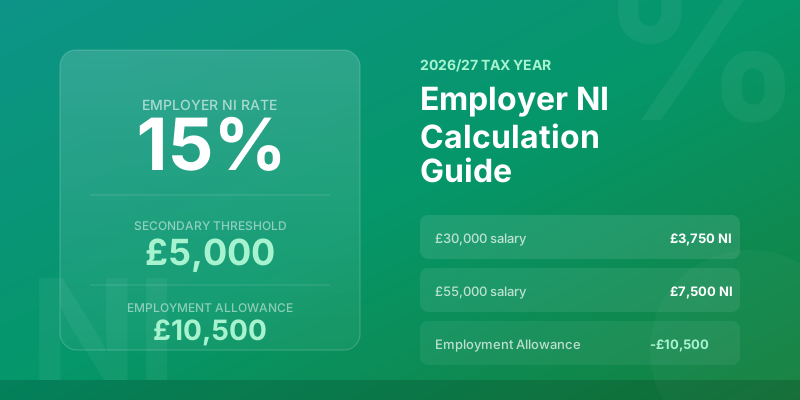
The employer National Insurance rate increase came into effect on 6 April 2025. The rate moved from 13.8% to 15%, and the secondary threshold, the point at which employer NI kicks in, dropped from £9,100 per year to £5,000. Both changes working simultaneously created a significantly larger NI liability than many employers initially modelled, and the effects are still working their way through business finances nearly a year on.
The combination matters because it is not simply a question of paying a higher percentage on the same earnings. By lowering the secondary threshold, the government also expanded the base on which that higher rate applies. An employee earning £25,000 per year previously attracted employer NI on £15,900 of earnings. Under the new rules, that same employee attracts employer NI on £20,000 of earnings. At 15%, the employer NI bill on that one employee rose from roughly £2,194 to £3,000, an increase of over £800.
Working Through the Numbers
The practical impact is clearest when you work through it employee by employee. Take a small business with ten employees, all earning £28,000 per year. Under the old rules, each employee attracted employer NI of 13.8% on £18,900, giving a per employee cost of £2,608 and a total bill of £26,080. Under the current rules, each employee attracts 15% on £23,000, giving a per employee cost of £3,450 and a total bill of £34,500. That is an increase of £8,420 for ten employees.
For businesses with higher headcounts or higher average salaries, the cumulative figure is considerably larger. A business with 50 employees on an average salary of £35,000 would be looking at an additional employer NI cost of around £55,000 per year compared with the old position.
Employment Allowance: The Offset That Helps Most Small Businesses
The government did increase the Employment Allowance as part of the same package. It rose from £5,000 to £10,500 from 6 April 2025, and crucially, the £100,000 eligibility cap was removed. Previously, businesses whose employer NI bill exceeded £100,000 could not claim the Employment Allowance at all. That restriction is gone, meaning many more businesses can now claim the offset.
For eligible businesses, the Employment Allowance effectively exempts the first £10,500 of employer NI from each tax year. For very small employers, this will cover their entire liability. A business with three employees on £20,000 per year would have a total employer NI liability of approximately £4,500, which the Employment Allowance covers entirely.
For larger businesses, the £10,500 offset takes the edge off but does not fundamentally change the picture. A business with 20 employees on average salaries of £30,000 might have a total employer NI bill of around £75,000. The Employment Allowance brings that down to £64,500, still a substantial increase from the old position.
Who Feels It Most
The change has hit certain employer profiles harder than others. Businesses with a large proportion of part time, lower paid workers feel the secondary threshold reduction acutely. Someone working 20 hours a week at the National Living Wage earns roughly £13,300 per year. Under the old threshold, that worker barely attracted any employer NI at all. Under the current rules, the employer pays 15% on £8,300 of earnings, a cost of £1,245 per part time worker per year. For a hospitality business or care provider with dozens of part time staff, this adds up fast.
Directors of owner managed companies also need to take a close look. Many directors pay themselves a salary just above the lower earnings limit to preserve their National Insurance record. With the secondary threshold now at £5,000, a director's salary of £6,708 (the Lower Earnings Limit) attracts employer NI of 15% on £1,708, roughly £256 per year. Small individually, but worth noting when reviewing director remuneration structures.
Salary Sacrifice and Employer NI
One consequence of the higher employer NI rate is that salary sacrifice schemes have become more valuable from an employer perspective. When an employee sacrifices salary into a pension through a qualifying arrangement, the employer pays no NI on the sacrificed amount. At 15%, the saving is more significant than it was at 13.8%. A business whose employees collectively sacrifice £500,000 per year into pensions saves £75,000 in employer NI, compared with £69,000 under the old rate.
Modelling Your Payroll Costs Accurately
The April 2025 changes created a need to remodel payroll costs that many businesses did not fully complete at the time. Cashflow forecasts built on pre 2025 NI rates will be underestimating your true employment costs. The compounding effect of the higher rate, the lower threshold, and the interaction with wage increases means that the cost of employing people has risen substantially.
The Employer NI Calculator from MBridge takes your payroll data, applies the current 15% rate and £5,000 secondary threshold, accounts for the Employment Allowance where applicable, and gives you an accurate total employer NI figure. If your current financial model was built before April 2025 and has not been refreshed since, running your numbers through the calculator is a useful starting point.
Planning for 2026/27
There are currently no announced changes to the employer NI rate or secondary threshold for 2026/27. The 15% rate and the £5,000 threshold look set to continue. The Employment Allowance of £10,500 is also expected to remain. Factor in the April 2026 wage increases, and your total payroll cost per employee will continue to edge upwards. Build that into your 2026/27 budget now, before the April payroll deadline makes it a reactive problem rather than a planned one.
Have a question about this article?
Our team is happy to help with any questions about payroll regulations. Get in touch and we will get back to you within one working day.
Ask Us a Question